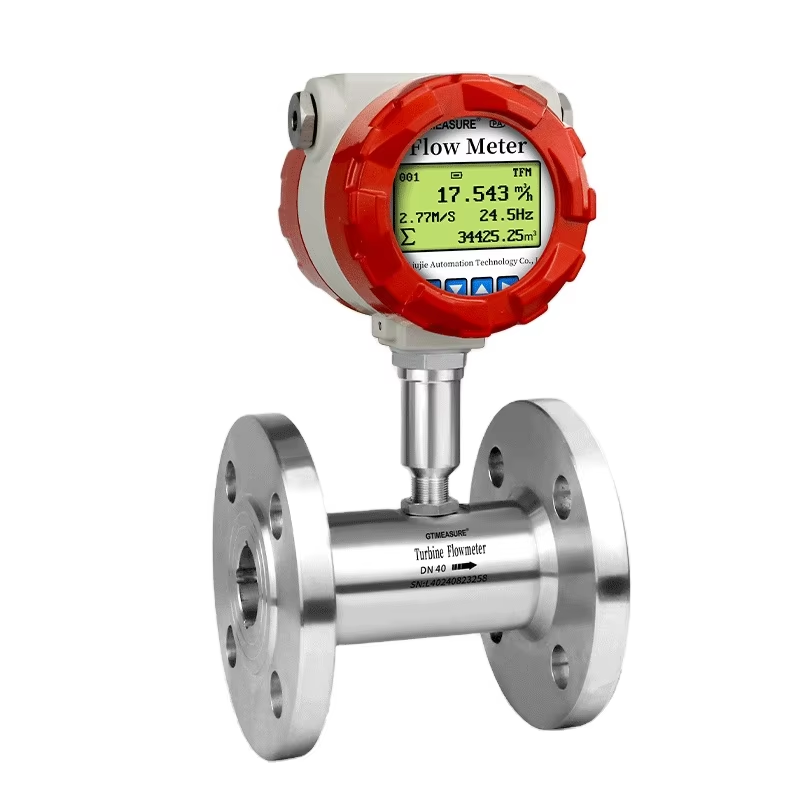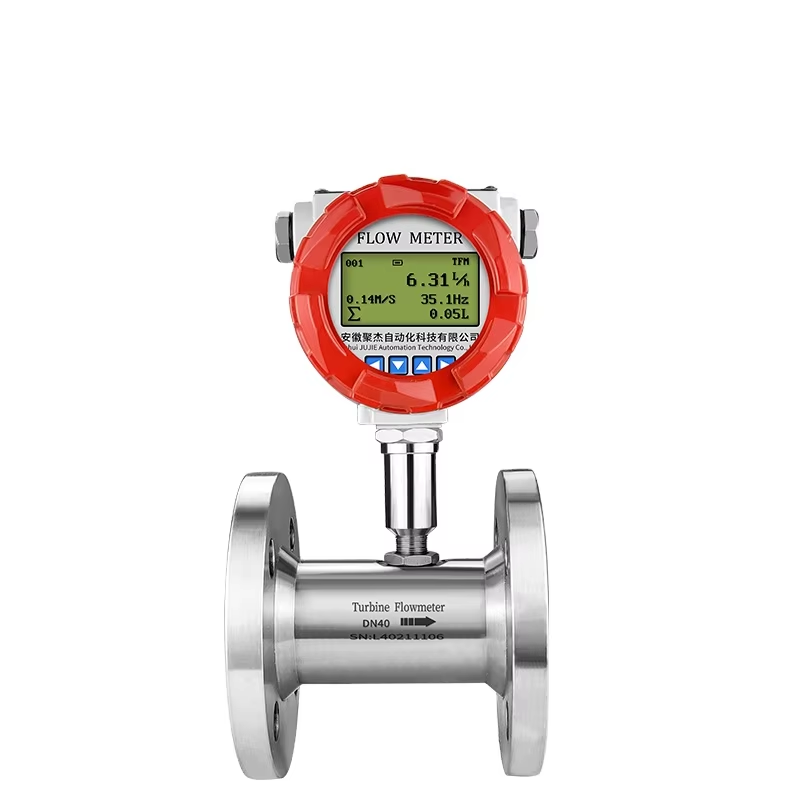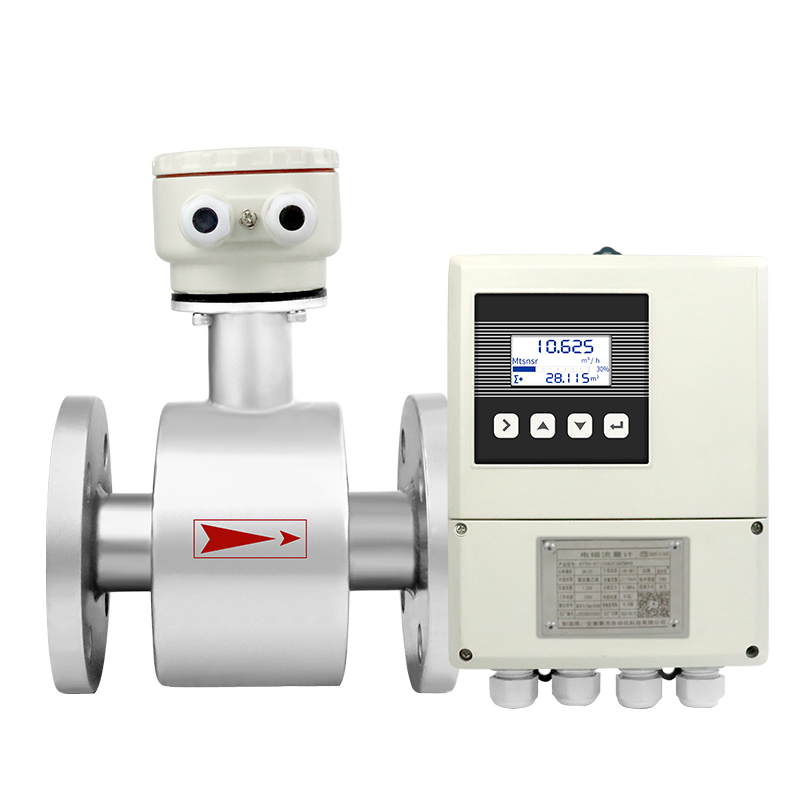
The core of precise flow control in the metallurgical automatic control system
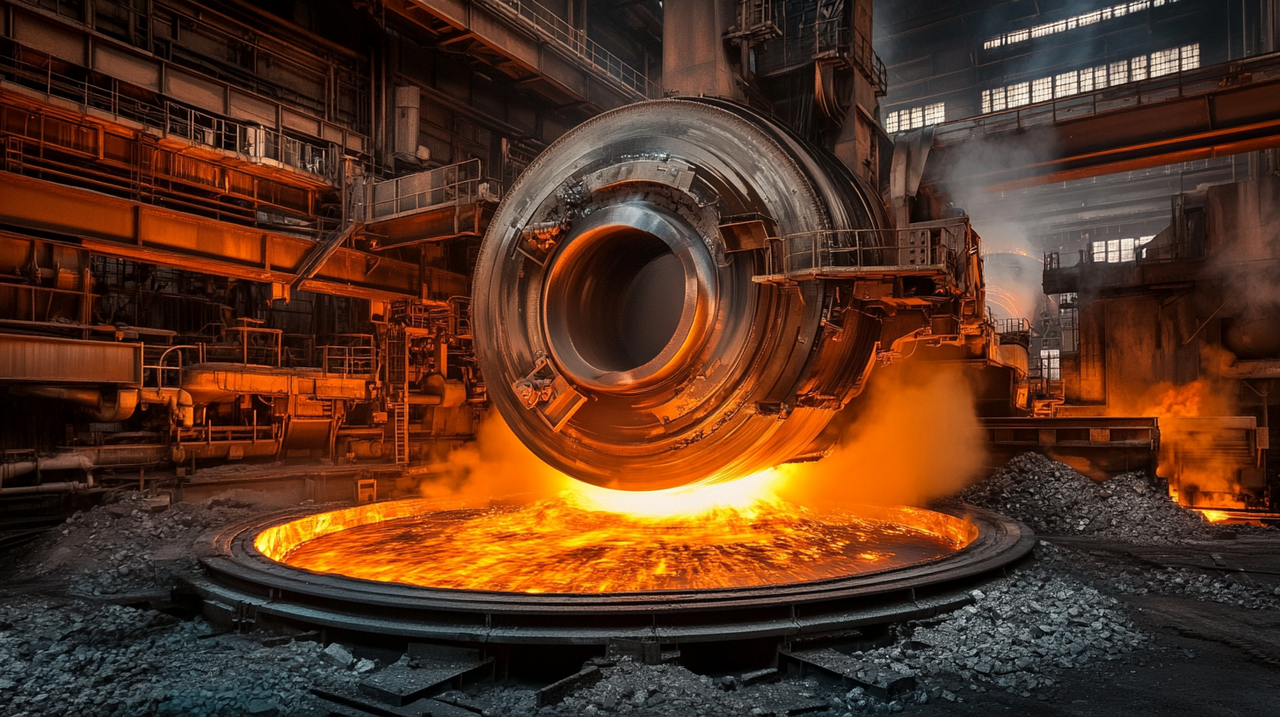
In the high-temperature, high-pressure and highly corrosive environment of metallurgical production, the flow stability of fluid media directly determines the smelting efficiency, product quality and production safety. From the circulation of blast furnace cooling water to the extraction and separation of rare earths, from the addition of acid and alkali media to the treatment and discharge of wastewater, flowmeters, as core monitoring equipment, are like the "flow nerve endings" of metallurgical production lines. Through real-time and accurate flow data feedback, they provide key decision-making basis for intelligent control systems and become an important cornerstone for ensuring the continuous and efficient operation of the metallurgical process.
Pain points and core requirements of flow monitoring in metallurgical scenarios
The fluid media involved in metallurgical production are complex and diverse, including normal-temperature circulating water, high-temperature molten liquid, strong acid and strong alkali solutions, and slurry containing solid particles, etc. Special working conditions impose strict requirements on flowmeters. Firstly, there is environmental adaptability. The temperature in areas such as blast furnaces and converters often exceeds 150℃, and the pressure in some chemical and metallurgical processes exceeds 1.6MPa. Therefore, the flowmeter needs to have a structural design that can withstand high temperatures and pressures, while also resisting medium corrosion and particle erosion. Secondly, there is the measurement accuracy. In core processes such as rare earth extraction and separation, the control accuracy of the flow ratio (A/O ratio) between the aqueous phase and the organic phase directly determines the purity of the product. Even a slight deviation may lead to non-compliance with purity standards or waste of the extractant. Therefore, the accuracy of the flowmeter is required to reach the 0.1% level. In addition, the continuity of metallurgical production requires flowmeters to have long-term stability. They need to be able to operate continuously for several months without failure in harsh environments such as dust and vibration, and support self-diagnosis of faults.
The mainstream types of flowmeters in the metallurgical industry and their selection logic
The medium characteristics of different metallurgical processes vary significantly. Therefore, it is necessary to select the type of flowmeter specifically and match it with data recording devices to achieve full-process data traceability. The selection should follow the principle of "medium characteristics first, working condition matching as a supplement"
1. Electromagnetic flowmeter: The preferred choice for measuring corrosive media and pulp
The electromagnetic flowmeter, which operates based on Faraday's law of electromagnetic induction, has become the main force for measuring corrosive media in the metallurgical industry due to its characteristics of having no mechanical moving parts and strong anti-interference ability. Its core advantage lies in its compatibility with conductive media with a conductivity of ≥5μS/cm, such as sulfuric acid solution in the pickling workshop of steel mills and hydrochloric acid medium in the rare earth leaching process. By choosing Hastelloy electrodes in combination with PTFE linings, it can withstand a high temperature of 150℃ and a highly corrosive environment with a PH of 2. For pulp containing solid particles, the use of polyurethane wear-resistant lining can effectively extend the service life.
The key parameters for selection include: the fluid conductivity needs to be verified in advance. If the conductivity decays at high temperatures, an online monitoring module should be provided. The pipe diameter should be consistent with the process piping, and the diameter change ratio should not exceed 2:1; otherwise, a precision loss of more than 0.3% will be introduced. The flow rate should be controlled within the effective range of 0.3 to 15m/s. For low-flow scenarios, dedicated low-flow models should be selected. The circulating water system of a certain steel plant once suffered from electrode corrosion within three months due to the selection ignoring the corrosiveness of the medium. After replacing the combination of Hastelloy electrodes and PTFE linings, it achieved stable operation, confirming the importance of material compatibility.
2. Data logger: A key support for flow data traceability and analysis
In the entire process of metallurgical production, data loggers are used in conjunction with flow meters and are the core equipment for achieving precise collection, storage and traceability of flow data. Its core value lies in continuously recording the real-time measurement data of the flowmeter to form a complete flow variation curve, providing reliable data basis for process optimization, quality traceability and fault detection. Whether it is the flow monitoring of blast furnace cooling water circulation or the medium flow control in the pickling process, the data logger can synchronously capture the flow data and, in combination with the time stamp, form a traceable data file.
When selecting a data logger, particular attention should be paid to compatibility and environmental adaptability. It is necessary to ensure that it matches the communication protocol of the flowmeter and supports mainstream industrial communication standards such as Modbus and HART to achieve seamless data transmission. In the high-temperature and dusty environment of the metallurgical workshop, models with dust-proof and oil-proof enclosures should be selected, and the protection level should not be lower than IP65. For scenarios that require long-term data storage, large-capacity storage modules should be selected to support dual guarantees of local data storage and cloud backup. A certain steel plant successfully traced the connection between a certain product quality fluctuation and abnormal acid flow by installing data loggers in the pickling workshop, providing precise data support for process adjustment and effectively reducing the occurrence rate of similar quality problems.
Full-process management of flowmeters: from installation and calibration to maintenance and troubleshooting
The measurement accuracy of a flowmeter not only depends on the selection but also on the standardized management throughout its entire life cycle. The three links of installation, calibration and maintenance form a closed-loop control to ensure the long-term stable operation of the equipment.
1. Installation: A key step to avoid environmental interference
Before installation, it is necessary to confirm the working conditions. For explosion-hazardous areas, explosion-proof models such as ExdⅡCT4 should be selected. For outdoor open-air installation, a protection level of IP67 or above should be reached. The installation location should be far away from strong electromagnetic interference sources, and the grounding resistance should be controlled within 4Ω. Ensure that the measuring tube operates at full capacity. In non-full tube scenarios, a throttling device should be installed. For the rolling mill area with intense vibration, shock-absorbing brackets need to be installed to prevent measurement deviations caused by pipeline vibration.
2. Calibration: A necessary guarantee for traceability of measurement values
The metallurgical industry should follow the principle of "regular calibration + abnormal calibration". Regular calibration should be carried out under normal working conditions, and the calibration cycle for core processes should be shortened. Calibration can be carried out by using the standard flowmeter comparison method. The flowmeter to be calibrated is connected in series with the authoritative certified standard equipment, and the parameters are corrected through multi-flow point comparison. A certain rare earth enterprise has effectively stabilized the flow stability of the extraction process and ensured product quality through standardized calibration.
3. Maintenance and Troubleshooting: Adhere to the principle of "diagnosis first, then handling"
Daily maintenance requires checking the tightness of the terminal blocks and the cleanliness of the electrodes every week, cleaning the dust on the sensor surface every month, and verifying the grounding reliability every quarter. Troubleshooting should follow the principle of "appearance first, then interior; electrical first, then mechanical" : If the flow display shows zero, first confirm that the pipeline is full and the conductivity of the medium, and then check whether the electrodes are scaled. If the measurement deviation is large, first check the installation position and calibration coefficient, and then investigate whether the medium parameters have undergone sudden changes. For instance, when there is medium in the pipeline but it shows zero, after inspection, it is found that the pipe is not full. After adjusting the installation height of the pipeline, the normal measurement is restored.
Intelligent Upgrade: The Development Trend of Metallurgical Flowmeters
With the intelligent transformation of the metallurgical industry, the collaborative application of flowmeters and data loggers is moving towards intelligent upgrading. In the current mainstream solutions, data loggers have achieved seamless integration with metallurgical automatic control systems, enabling synchronous analysis of stored historical flow data and real-time data, providing data support for process optimization. Some intelligent data loggers are equipped with abnormal data warning functions. When the flow data exceeds the preset threshold, they can promptly issue an alarm and trigger the control system to make adjustments. In the future, by integrating industrial Internet technology, data loggers will achieve multi-device data fusion analysis. They will not only integrate flow data but also associate parameters such as temperature and pressure, providing more comprehensive data services for the full-process optimization of metallurgical production.
In the entire chain of metallurgical production, the precise measurement and stable operation of flowmeters are the key guarantees for achieving efficient smelting and high-quality output. From the parameter matching during selection to the full-process management during operation, the standardized operation of each link directly affects the measurement accuracy. With the in-depth application of intelligent technology, flowmeters will play a more core role in the green and intelligent transformation of the metallurgical industry, becoming an important bridge connecting physical production and digital control.