The coordination of flowmeters with quantitative control cabinets and data loggers in agricultural irrigation
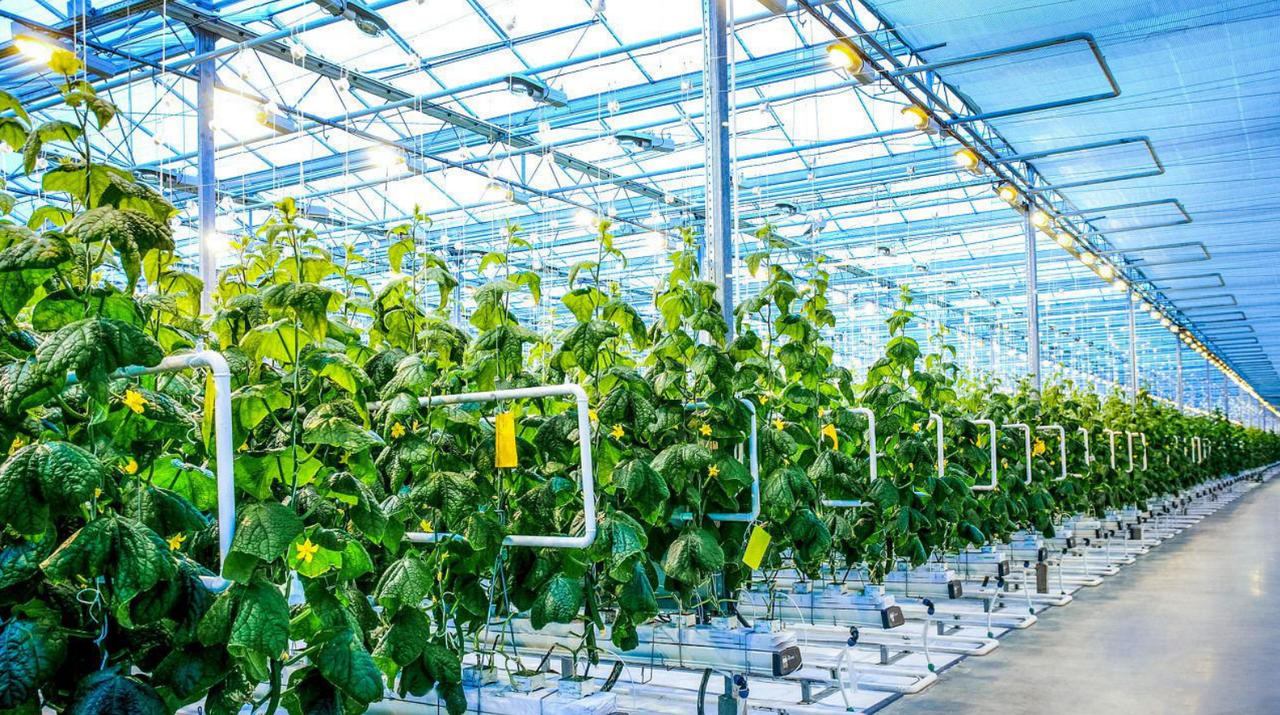
In the process of agricultural modernization, precise control of the irrigation link is the core approach to achieving water conservation, efficiency improvement, quality enhancement and production increase. Traditional irrigation relies on manual experience to determine water volume, which not only leads to problems such as water resource waste and uneven irrigation, but also makes it difficult to meet the demands of large-scale agricultural production. The combined application of flowmeters, quantitative control cabinets and data loggers has built a full-process intelligent irrigation system of "monitoring - control - recording", providing a technical solution that is both reliable and efficient for agricultural irrigation.
1. Core components: The three key equipment for precise irrigation control
Although flowmeters, quantitative control cabinets and data loggers have different functional positioning, they form complementary closed loops in the irrigation system. The performance compatibility and collaborative operation of the three directly determine the accuracy of irrigation control.
1.1 Flowmeter: The "Measuring Ruler" of Irrigation Water Volume
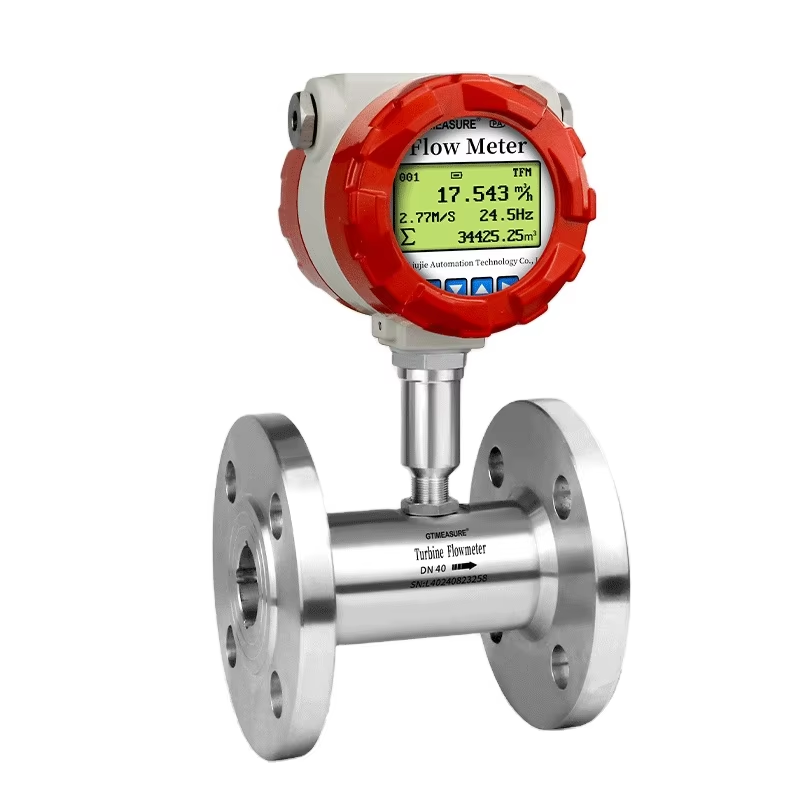
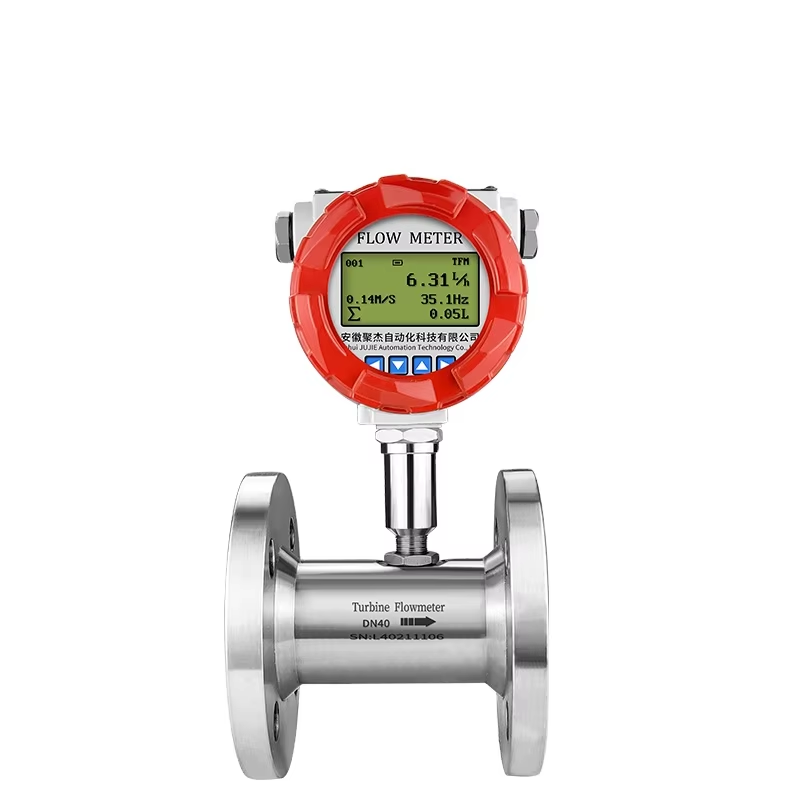
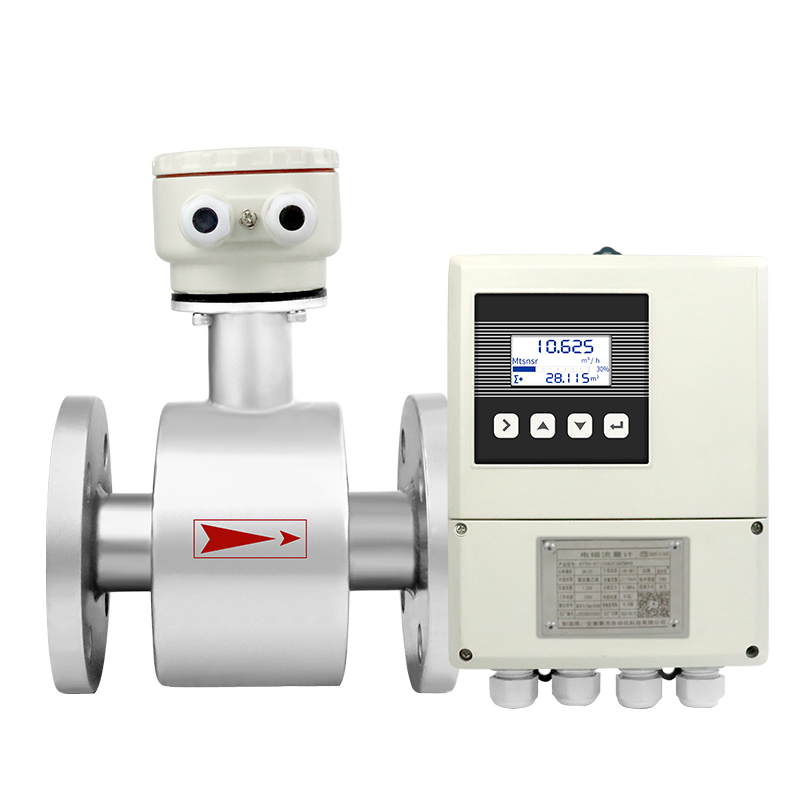
As the "eyes" of the irrigation system, the core function of the flowmeter is to collect the instantaneous flow and cumulative flow data in the pipeline in real time, providing precise basis for subsequent control. In agricultural irrigation scenarios, pulse output type devices such as turbine flowmeters and vortex flowmeters are often selected based on parameters like water quality, pressure, and pipe diameter. These devices can convert flow signals into electrical pulse signals and precisely feedback the changes in irrigation water volume at every moment. For instance, in field irrigation, turbine flowmeters can withstand the slight impurities in the irrigation water of farmland. They generate pulse signals through the rotation of the blades, with each pulse corresponding to a fixed unit of water volume, thus achieving real-time transmission of flow data.
1.2 Quantitative Control Cabinet: The "Central Brain" of the Irrigation Process
The quantitative control cabinet is the control core of the entire irrigation system, integrating key components such as quantitative control instruments, relays, and contactors, and is responsible for receiving signals and executing control logic. Its core function is to automatically calculate the corresponding number of flowmeter pulses based on the preset irrigation volume. After starting the water pump and valve, it receives the flowmeter signal in real time. When the cumulative flow reaches the set value, it immediately outputs a switch signal to cut off the power supply of the water pump and close the valve. Meanwhile, the control cabinet also supports manual/automatic dual-mode switching. Farmers can directly control the start and stop of the equipment through buttons, or set a humidity threshold to link with soil sensors for more precise intelligent control.
1.3 Data Logger: The "Memory Hub" of Irrigation Data
The data logger plays a crucial role in the full data retention and traceability of the irrigation process. It can collect and store in real time the instantaneous flow rate, cumulative flow rate of the flowmeter, as well as the start and stop time of the water pump and the operating status of the control cabinet and other core data. Modern recorders mostly support dual functions of local storage and remote transmission. They can not only retain data for several months via SD cards but also upload the data to the cloud platform through 4G modules. Farmers can view historical irrigation records and equipment operation curves through mobile phone apps. Some high-end devices also have data filtering functions. By taking the average value of multiple data collections, signal interference is avoided to ensure data accuracy.
2. Collaborative process: Full-chain control from setup to completion
The coordinated operation of the three follows a standardized process of "preset - monitor - control - record", with each step having clear logical connections and technical support to ensure that the irrigation process is precisely controllable and the data is traceable.
2.1 Parameter Preset Stage: Farmers, based on actual needs such as crop type and soil moisture conditions, remotely set the total amount of a single irrigation (quantitative value) and the operation mode (automatic/manual) through the buttons on the quantitative control cabinet or the APP. If the automatic mode is selected, the upper and lower limits of soil moisture also need to be set simultaneously. The control cabinet will automatically associate the soil sensor data.
2.2 Startup and Monitoring Stage: After the system starts up, the quantitative control cabinet immediately outputs a signal to start the water pump and solenoid valve. Once the irrigation water enters the pipeline, it drives the flowmeter to operate. The flowmeter converts the real-time flow into pulse signals and continuously transmits them to the control cabinet and data logger. At this point, the recorder starts working simultaneously, collecting data from the flowmeter and recording the start-up time of the water pump and the initial flow value at the same time.
2.3 Data Retention and Traceability stage: After the irrigation is completed, the data logger automatically organizes the data of this irrigation, including the start time, stop time, actual irrigation volume, average flow rate, etc., to form a complete irrigation record. These data are stored and backed up locally on the one hand, and uploaded to the cloud platform on the other. Farmers can view them at any time and use them to analyze the irrigation demand patterns of different crops.
3. Practical Value: Multi-dimensional improvements from water conservation to efficiency enhancement
3.1 Precise Control stage: The control cabinet accumulates the pulse number of the flowmeter in real time. When the value reaches the pulse number corresponding to the preset quantitative value, the control logic is immediately triggered: first, the power supply of the solenoid valve is cut off to close the waterway. After a short interval, the power supply of the water pump is disconnected to avoid water hammer impact. At the same time, a "irrigation completed" signal is sent to the data logger. If it is in automatic mode, the control cabinet will synchronously compare the data from the soil moisture sensor. If the humidity has reached the upper limit, it will stop directly. If it has not reached the upper limit, the remaining irrigation volume will be recalculated and the operation will continue.
This combined solution has demonstrated remarkable economic and ecological value in the application practice of farmlands and orchards in many places. In terms of water resource utilization, precise quantitative control can significantly reduce the waste of water resources caused by traditional flooding irrigation. In terms of labor costs, automated operation has significantly increased the managed area per household and greatly reduced the costs of field inspection and operation.
For instance, in the scenario of orchard irrigation, farmers can preset the irrigation quotas for different fruit trees through the APP. The system can precisely control the irrigation amount for each row of fruit trees. Combined with the historical data from the data logger, it can analyze the water demand patterns of fruit trees in different seasons, achieving "tailored" precise irrigation. In plain field scenarios, the control cabinet can adapt to the pressure changes of pipelines in different terrains. The flowmeter compensates in real time for the flow error caused by pressure fluctuations, ensuring that the deviation of irrigation volume per mu is controlled within 5%.
Conclusion: The collaborative application of flowmeters, quantitative control cabinets and data loggers has driven the transformation of agricultural irrigation from "empirical judgment" to "data-driven". With the development of Internet of Things (iot) technology, the three will further integrate with soil sensors, weather stations and other devices to build a more comprehensive smart irrigation ecosystem, providing solid technical support for water conservation, efficiency improvement and high-quality development in agriculture.