Analysis of the Application of Pressure Transmitters in Aerial Work Platforms
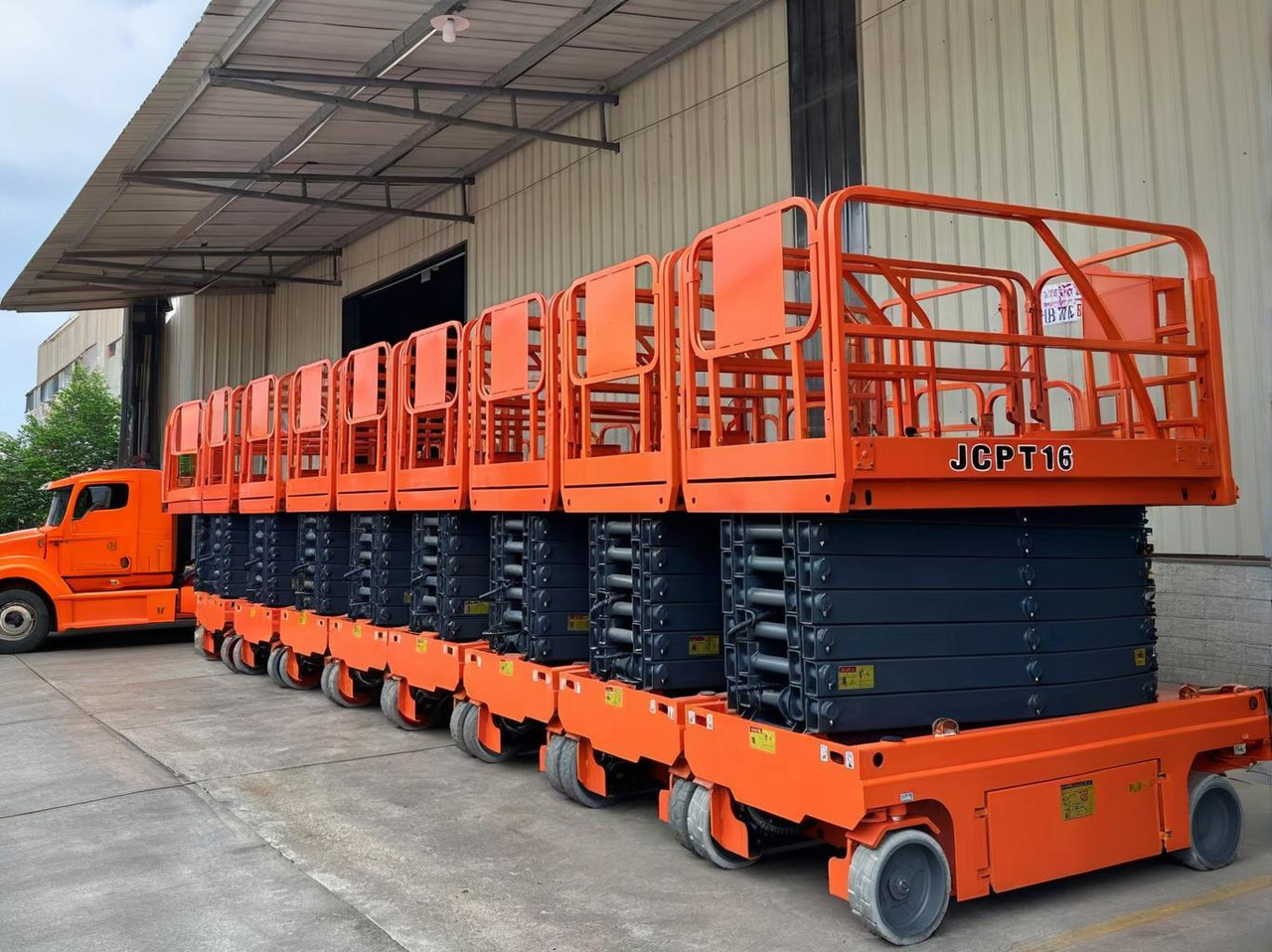
As a core piece of equipment in construction, power generation, logistics, and other fields, the safe and stable operation of aerial work platforms directly impacts the safety of personnel and project efficiency. This equipment primarily relies on a hydraulic system to drive platform lifting, and changes in hydraulic system pressure directly reflect the equipment's operating status—overloading, leaks, or component wear will all manifest as pressure anomalies. Pressure transmitters, as core components for capturing pressure signals, have become crucial for monitoring operation and diagnosing faults in aerial work platforms. This article will analyze the practical application of pressure transmitters in aerial work platforms from four dimensions: working principle, application value, core application process, and selection and maintenance points.
1. Core Working Principle: From Pressure Signal to Recognizable Data
The core function of a pressure transmitter is to accurately convert the physical pressure of the hydraulic system into an electrical signal recognizable by the industrial control system. Its working process follows the logical chain of "pressure sensing—signal conversion—signal optimization—standard output," ensuring the accuracy and stability of data transmission.
First is the pressure sensing stage. The hydraulic oil pressure of the aerial work platform is transmitted to the transmitter's isolation diaphragm through a threaded interface or flange. The isolation diaphragm prevents the hydraulic oil from directly contacting the internal components, while simultaneously transmitting the pressure without loss to the core sensing element through an incompressible silicone oil filling fluid. Currently, the mainstream sensing technology is silicon piezoresistive, whose core is a silicon chip with a Wheatstone bridge circuit. Under pressure, the chip undergoes slight deformation, directly leading to a change in the bridge resistance value; some high-precision applications use capacitive sensing, achieving capacitance value conversion through pressure-induced changes in electrode spacing.
Next is the signal conversion and optimization stage. The resistance or capacitance changes generated by the sensing element are converted into weak millivolt-level electrical signals. This signal is susceptible to interference from environmental factors such as temperature and vibration, and needs to be processed by a signal conditioning circuit: first, amplifying the weak signal to an appropriate level; second, using a built-in temperature sensor to compensate for temperature drift in real time, eliminating the impact of ambient temperature on the data; third, performing linearization calibration to ensure a strictly proportional relationship between the signal and pressure; finally, completing zero-point and full-scale adjustments to ensure measurement accuracy.
Finally, the standard output stage. The optimized signal is converted into an industry-standard 4-20mA current signal—the most commonly used output format for aerial work platforms. 4mA corresponds to zero pressure (which can be adjusted as needed), and 20mA corresponds to full-scale pressure. Its advantages include strong anti-interference capabilities, long-distance transmission over hundreds of meters, and the characteristic that the current is 0mA when the line is broken, facilitating fault diagnosis. Some high-safety-level applications use a dual-output mode with the HART protocol, superimposing a digital signal on the analog signal to achieve parameter configuration and diagnostic information transmission.
2. Application Value: Dual Support for Safety Assurance and Efficiency Improvement
In aerial work platforms, the application value of pressure transmitters is concentrated in two core scenarios: "real-time monitoring and early warning" and "accurate fault diagnosis," directly addressing the pain points of low efficiency and delayed detection of hidden dangers in traditional manual inspections.
From a safety perspective, overloading is one of the most dangerous hazards for aerial work platforms. When the pressure transmitter is installed on the boom cylinder (lifting cylinder), it can sense changes in cylinder pressure in real time—when the load on the work platform exceeds the rated value, the hydraulic system pressure will instantly exceed the threshold. The transmitter immediately transmits the abnormal signal to the control system, triggering an audible and visual alarm and cutting off the lifting action, preventing rollover accidents. In addition, during the equipment startup phase, the transmitter can perform an initial check of the hydraulic system pressure. If the pressure fails to reach the startup threshold, it immediately indicates "system leakage" or "insufficient power," preventing the equipment from operating with defects.
From an efficiency perspective, the pressure transmitter enables accurate fault localization and prediction. Traditional fault diagnosis requires disassembling the hydraulic system, which takes hours or even days; however, the pressure curve recorded by the transmitter can quickly determine the type of fault: if the pressure drops slowly and is below the standard value, it is likely a hydraulic oil leak; if the pressure fluctuates violently and is accompanied by abnormal noise, it may be hydraulic pump wear or valve sticking. Engineering data shows that aerial work platforms equipped with pressure transmitters have an average 70% reduction in fault diagnosis time and a 40% reduction in equipment downtime. 3. Core Application Process: End-to-End Implementation from Installation to Diagnosis
The application of pressure transmitters in aerial work platforms requires following a complete process of "installation and calibration—real-time monitoring—fault diagnosis—feedback control," ensuring the authenticity and reliability of each link and adapting to the complex operating environment of the equipment.
The first step is installation and calibration. Considering the vibration characteristics of aerial work platforms (vibration frequency of 10Hz~2000Hz and acceleration up to 20g during operation), the transmitter needs to adopt an anti-vibration mounting structure, fixed to the oil outlet of the luffing cylinder of the hydraulic system or a key node of the main oil circuit, avoiding proximity to strong vibration sources such as hydraulic pumps. After installation, on-site calibration is required: applying 0MPa (zero point) and 35MPa (common full scale) pressure through a standard pressure source, adjusting the transmitter output current to 4mA and 20mA, and compensating for the zero-point offset caused by the installation position, ensuring that the measurement error is controlled within ±0.5%FS.
The second step is real-time monitoring and data transmission. During equipment operation, the transmitter collects hydraulic pressure data every 100ms and transmits it to the on-board control system via a 4-20mA signal. The control system compares the real-time data with preset thresholds (such as the pressure corresponding to the rated load of 15MPa and the starting pressure of 5MPa), and displays the pressure curve in real time on the operation panel, allowing operators to intuitively understand the equipment status. For manned operation scenarios, some equipment uses dual-output transmitters, one signal for monitoring and the other complementary signal for self-calibration. When the deviation between the two signals exceeds 5%, a sensor fault alarm is immediately triggered, meeting the PLd safety level requirements.
The third step is fault diagnosis and feedback control. When pressure abnormalities occur, the system performs hierarchical processing based on the type of abnormality: if it is instantaneous overpressure (such as a 100g impact pressure caused by the sudden opening of the valve), the overload protection function of the transmitter will temporarily shield the interference signal to avoid false alarms; if it is continuous overpressure (exceeding 15MPa for 3 seconds), the system immediately cuts off the lifting oil circuit and starts the emergency descent procedure; if the pressure continuously decreases (from 10MPa to 3MPa within 5 minutes), it is judged as a hydraulic leak, and an audible and visual alarm is issued and the equipment is locked. All abnormal data is automatically stored for later troubleshooting. 4. Selection and Maintenance: Key Considerations for Adapting to Scene Requirements
The complex operating environment of aerial work platforms (high temperature, dust, vibration, electromagnetic interference) places special demands on the selection and maintenance of pressure transmitters, directly affecting equipment operational stability.
Selection should focus on four core indicators: First, range and overload capacity, which must cover the equipment's maximum working pressure (usually 0-35MPa) and have a 2-3 times overload capacity to withstand instantaneous overpressure shocks; second, anti-interference performance, requiring electromagnetic compatibility certification to avoid electromagnetic interference from devices such as frequency converters affecting signal stability; third, structural size, due to the limited space reserved in the hydraulic valve block, miniaturized transmitters must be selected; fourth, output mode, dual-output models are preferred for manned platforms, while single-output models can be used for unmanned platforms to reduce costs.
Maintenance should follow the principle of "regular calibration + cleaning and protection." It is recommended to visually inspect the transmitter monthly, clean residual hydraulic oil at the interface to prevent signal drift caused by dust accumulation; perform calibration quarterly using a portable calibrator to check zero point and full-scale errors; and conduct a comprehensive inspection annually, focusing on checking for damage to the isolation diaphragm and aging of the cable insulation layer to ensure stable sensor performance.
5. Conclusion
Pressure transmitters, as the "pressure sensing nerve" of the hydraulic system of aerial work platforms, are crucial for the safe operation of the equipment due to their accurate measurement and stable transmission capabilities. From the signal conversion logic of the working principle to the full-chain implementation of the application process, and the detailed control of selection and maintenance, every link reflects the core logic of "technology adapting to the scene." As aerial work platforms move towards intelligent upgrades, pressure transmitters will be combined with IoT technology to achieve remote monitoring and predictive maintenance, further improving equipment safety redundancy and operational efficiency.