Application of Monitoring and Control Technology for Ship Water Circulation Cooling System
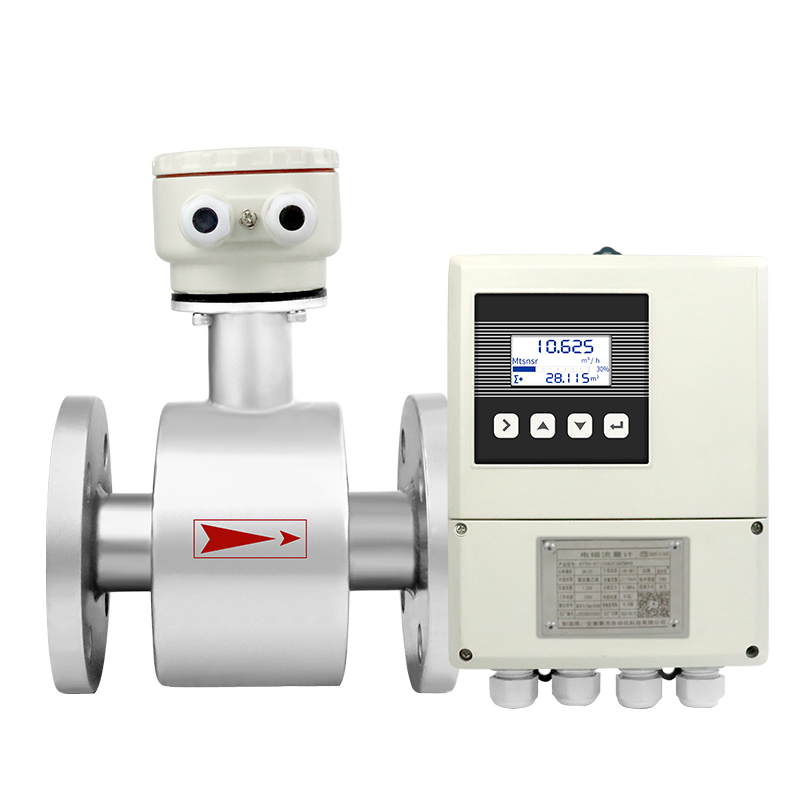
In the stable operation system of the ship's power system, the water circulation cooling system plays a key role as the "thermal management hub". Its core task is to promptly remove the heat generated by core equipment such as the main engine and generator through the staged heat exchange between fresh water and seawater, ensuring that the working temperature of the equipment remains within a safe range. As the heat exchange core of the system, the heat exchange efficiency of the central cooler directly determines the energy consumption level and operational reliability of the entire cooling system. The in-depth application of monitoring and control technologies is precisely the core support for achieving the optimization of heat exchange efficiency, precise regulation of seawater flow, and maximum energy conservation. Monitoring devices such as pressure transmitters, temperature transmitters, and electromagnetic flowmeters capture operating parameters in real time. The control system makes intelligent decisions based on data, and data loggers ensure data traceability and optimization. The three together build a complete technical system of "perception - decision-making - execution - traceability", laying a solid foundation for the efficient operation of the system. The core architecture and application logic of monitoring and control technology The monitoring and control technology system of the ship's water circulation cooling system takes "hierarchical architecture and collaborative linkage" as its core, and is divided into three levels: the perception layer, the control layer and the data layer. Each level is seamlessly connected, forming a full-process technical application model covering "condition monitoring - intelligent regulation and control - data support". The specific architecture and application logic are as follows. 1.1 Perception Layer: The "nerve endings" for Precisely Capturing Operational Status The perception layer is the foundation of monitoring and control technology, undertaking the core task of real-time collection of operating parameters. It is mainly composed of dedicated instruments such as electromagnetic flowmeters, pressure transmitters, and temperature transmitters. Its application core is "accuracy, stability, and adaptability". In view of the characteristics of the ship's seawater circuit, such as strong conductivity, impurity content and fluctuating working conditions, the perception layer selects electromagnetic flowmeters as the core of flow monitoring, which are installed at key nodes such as the outlet of the seawater pump and the inlet and outlet of the central cooler. Based on Faraday's law of electromagnetic induction, precise flow measurement is achieved, and it is not affected by medium temperature, pressure and impurities. Pressure transmitters are deployed at the inlet and outlet of the Marine water pipeline and key positions in the fresh water circuit to monitor the pressure changes in the pipeline in real time, determine the smoothness of the pipeline and the load status of the equipment. The temperature transmitter mainly monitors the temperature of the fresh water inlet and outlet, seawater inlet and outlet of the central cooler and the cooling water of the main unit, directly reflecting the heat exchange efficiency and the heat dissipation status of the equipment. All the devices in the perception layer are designed specifically for ships, featuring anti-corrosion, anti-vibration, explosion-proof and other characteristics. They are suitable for the special environments of ships such as turbulence, humidity and salt spray, ensuring continuous and stable data output under complex working conditions such as ocean voyages. 1.2 Control Layer: The "Decision Center" for Intelligent Regulation and Control The control layer is the core execution unit of monitoring and control technology. It takes the Marine PLC (programmable Logic Controller) or dedicated control system as the core, and based on the real-time data transmitted by the perception layer, it precisely controls the actuator according to the preset logic. Its application core is "dynamic adaptation, energy conservation and high efficiency". The regulation logic of the control layer adopts the "load matching" principle. When the temperature transmitter detects that the temperature of the fresh water outlet of the central cooler is higher than the set threshold, it indicates that the heat dissipation demand of the main unit has increased. The control system immediately retriays the real-time flow data of the electromagnetic flowmeter. If the flow has not reached the optimal value, it instructs the variable frequency seawater pump to increase the speed, increase the seawater flow, and improve the heat exchange efficiency. When the outlet temperature of fresh water is lower than the threshold, the control system instructs the water pump to reduce its rotational speed and decrease the flow of seawater to avoid unnecessary energy consumption. Meanwhile, the control layer has the emergency regulation capability for faults. When the pressure transmitter detects an abnormal increase in pipeline pressure (possibly due to pipeline blockage), the control system will first instruct the water pump to reduce the load and simultaneously trigger an alarm. If the electromagnetic flowmeter detects a sudden drop in flow and an increase in pressure, it can automatically activate the filter screen backwashing device for cleaning to restore the unobstructed flow of the pipeline. This "real-time monitoring - dynamic calculation - precise execution" regulation mode keeps the cooling system always in the optimal state of "operating on demand". 1.3 Data Layer: The "Data Foundation" Supporting Optimized Traceability The data layer, with data loggers at its core, undertakes the tasks of data storage, analysis, traceability and optimization support. It is the key to the continuous iteration of monitoring and control technologies, and its application core is "full storage and deep mining". The data logger collects real-time flow, pressure, and temperature data from the perception layer, as well as execution data such as the speed of the water pump and the opening degree of the valve from the control layer. These data are encrypted and stored at frequencies of seconds or minutes, with a storage capacity of up to tens of gigabytes, meeting the historical data retention requirements of ships during several months of ocean voyages. In terms of data application, on the one hand, real-time data synchronization is used to provide decision-making references for the control layer. When a certain parameter deviates from the threshold, the control layer is immediately linked to trigger regulation and issue an alarm. On the other hand, system optimization is achieved through historical data mining. Operators can analyze the parameter correlation curves under different navigation conditions (full load/empty load, high speed/low speed) through the visual interface of the data logger, find the optimal matching point of "heat exchange efficiency - energy consumption", and then optimize the preset parameters of the control layer. In addition, the complete data chain stored in the data layer also provides authoritative basis for fault traceability, equipment maintenance and industry supervision, achieving the application goal of "data-driven optimization and data-guaranteed security". 2. Electromagnetic Flowmeter: The Precise "Measurement and Control Core" for Optimizing Seawater Flow The seawater circuit of the ship's water circulation cooling system is in direct contact with the external seawater. The medium has the characteristics of strong conductivity, containing a small amount of impurities (such as plankton and sediment), and large fluctuations in working conditions (affected by the ship's navigation speed and draft depth). The electromagnetic flowmeter, with its technical advantages of being compatible with conductive media and having strong anti-interference ability, It has become the preferred equipment for monitoring and optimizing the control of seawater flow. It is mainly installed in the inlet pipeline from the outlet of the seawater pump to the central cooler and the seawater return pipeline, achieving real-time control of the flow at key nodes. Its core application value is reflected in three dimensions: precise flow measurement, energy-saving regulation linkage and operation status monitoring. In terms of precise flow measurement, the electromagnetic flowmeter is based on Faraday's law of electromagnetic induction. It calculates the flow velocity by measuring the induced electromotive force generated when seawater cuts the magnetic field lines, and then combines the cross-sectional area of the pipeline to obtain the instantaneous flow and cumulative flow. The measurement accuracy can reach above 0.5 grade, and it is not affected by seawater temperature, pressure or a small amount of impurities, and can accurately capture the subtle changes in seawater flow. This feature provides a data basis for the precise regulation of seawater flow, avoiding problems such as insufficient heat exchange or excessive energy consumption caused by flow measurement errors. In energy-saving control linkage, electromagnetic flowmeters, pressure transmitters, temperature transmitters and variable frequency water pumps form a closed-loop control system, which is a key link to achieve energy savings of 20% to 30%. When the system is in operation, the temperature transmitter monitors the temperature of the fresh water outlet of the central cooler in real time (reflecting the heat exchange effect), the pressure transmitter monitors the pressure at the inlet and outlet of the seawater pipeline (judging the pipeline smoothness), and the electromagnetic flowmeter transmits the real-time flow data to the control system. When the outlet temperature of fresh water is lower than the set value, it indicates that the heat exchange load has decreased. The control system, based on the flow data fed back by the electromagnetic flowmeter, instructs the variable-frequency seawater pump to reduce its rotational speed, decrease the seawater flow, and lower the energy consumption of the pump. When the outlet temperature of fresh water is higher than the set value, the control system increases the flow of seawater to enhance the heat exchange efficiency. This dynamic flow regulation based on actual heat exchange demands has completely overcome the high energy consumption drawbacks of the traditional fixed-flow operation mode and achieved the energy-saving goal of "supply flow as needed". In terms of operation status monitoring, the electromagnetic flowmeter is equipped with an abnormal flow alarm function. When it detects a sudden increase in seawater flow (possibly due to pipeline leakage) or a sudden decrease (possibly due to filter screen blockage or pump body failure), it immediately sends an alarm signal to the control system and simultaneously transmits the abnormal data to the data logger. Operators can quickly locate the fault point based on the alarm information. For instance, they can clean the filter screen in time when it is clogged and deal with the pipeline leakage urgently to prevent the heat exchange efficiency of the central cooler from dropping due to abnormal flow, which could lead to the serious consequence of the main unit and other core equipment shutting down due to overheating. In addition, the electromagnetic flowmeter uses anti-corrosion materials to make the sensor, which can adapt to the corrosive environment of seawater. Moreover, its structure has no mechanical rotating parts, reducing faults caused by impurities jamming and enhancing the reliability of the equipment during the navigation of ships. 3. Data Logger: The "Data Hub and Optimization Basis" for System Operation As the "data manager" of the ship's water circulation cooling system, the data logger is fully linked with electromagnetic flowmeters, pressure transmitters, temperature transmitters and control systems, centrally collecting, storing and analyzing various operating parameters. It not only provides data support for real-time regulation and control, but also offers core basis for system optimization, fault tracing and compliance inspection in the later stage. Its installation location is usually close to the central control room, facilitating centralized management and retrieval of data. Its core application functions are reflected in three aspects: multi-parameter integrated collection and storage, energy-saving analysis and optimization, as well as fault traceability and security guarantee. In terms of multi-parameter integrated collection and storage, the data logger can simultaneously connect multiple signals, including the instantaneous/cumulative flow data of seawater from the electromagnetic flowmeter, the pipeline pressure data from the pressure transmitter, the temperature data of each node of the temperature transmitter (such as the inlet and outlet of fresh water, the inlet and outlet of seawater, the temperature of the main unit cooling water, etc.), as well as the rotational speed and energy consumption data of the variable frequency water pump, etc. The collection frequency can be set to the second to minute level according to the demand. The data is stored in the local memory or the cloud server of the Marine industrial control network in encrypted format, with a storage capacity of up to tens of GB, meeting the historical data retention requirements for long-term navigation of ships. At the same time, it is adapted to the bumpy and humid environment of ships, and has a protection level of IP44 or above and excellent anti-vibration performance. In energy-saving analysis and optimization, data loggers provide scientific basis for the optimization of flow control strategies through in-depth mining of historical data. Operators can retrieve the flow-temperature-energy consumption curves under different navigation conditions (such as full load/empty load, high speed/low speed) through the visual interface of the data logger, analyze the heat exchange efficiency and energy consumption levels corresponding to different seawater flows, find the critical flow value of "optimal heat exchange efficiency - lowest energy consumption", and then optimize the flow setting parameters of the control system. For instance, through analysis, it was found that at a certain navigation speed, when the seawater flow rate is maintained at 80m³/h, it can not only meet the heat exchange requirements but also reduce the pump energy consumption by 20% compared to the originally set 100m³/h. Based on this, adjusting the control logic can achieve continuous energy conservation. Meanwhile, the data logger can automatically generate daily/weekly energy consumption reports, visually presenting the energy-saving effect of the system and providing data support for the energy consumption management of ship operations. In terms of fault traceability and safety assurance, the data logger is equipped with a complete alarm linkage and data traceability function. When the electromagnetic flowmeter detects abnormal flow, the temperature transmitter detects over-temperature or the pressure transmitter detects over-pressure, the data logger immediately triggers an audible and visual alarm and synchronously pushes the alarm time, abnormal parameter values, and the operating status of related equipment (such as water pump speed) to the central control room and the mobile terminals of the on-duty personnel. Meanwhile, the system automatically records the complete data chain before and after the alarm occurs, providing precise clues for fault detection. For instance, if an over-temperature alarm occurs and the flow data remains persistently low, it can quickly determine whether the filter is clogged or the water pump is faulty, avoiding blind maintenance. In addition, the historical data stored by the data logger must meet the regulatory requirements of the shipping industry. It can be retrieved at any time during equipment maintenance and safety audits to prove the compliance of the system operation. The application of electromagnetic flowmeters and data loggers is not isolated but forms an efficient and coordinated operation closed loop with pressure transmitters, temperature transmitters and other instruments and actuators. The temperature transmitter and pressure transmitter collect real-time data on heat exchange effect and pipeline status, while the electromagnetic flowmeter accurately captures changes in seawater flow. The three synchronously transmit the data to the data logger. The data logger integrates and analyzes multi-dimensional data. If it detects parameters deviating from the set values (such as excessively high temperature or insufficient flow), it immediately sends control instructions to the control system. The control system instructs the variable frequency water pump to adjust its rotational speed, change the flow rate of seawater, and simultaneously feeds back the regulation results to the data logger for storage. The data logger continuously monitors the adjusted parameter changes to verify the regulation effect, forming a complete closed loop of "monitoring - analysis - regulation - verification". 4. Conclusion: Instruments empower the intelligent upgrade of ship cooling systems Under the development trend of green and energy-saving ships, the efficient operation of the ship's water circulation cooling system has become the key to reducing operating costs and enhancing reliability. Electromagnetic flowmeters, with their precise measurement and adaptability to seawater medium, have become the core support for flow optimization and regulation. The data logger, with its multi-parameter integrated management and in-depth analysis capabilities, provides data support for system energy-saving optimization and safe operation. The coordinated application of the two with other instruments not only ensures the heat exchange efficiency of the central cooler, but also realizes the precise regulation of seawater flow and significant energy conservation, promoting the upgrade of the ship's water circulation cooling system from "passive cooling" to "intelligent regulation", laying a solid foundation for the stable, efficient and energy-saving operation of the ship's power system.