Oilfield water injection and crude oil measurement
Application of precise monitoring and control technology for oilfield Water Injection systems
Oilfield water injection, as a core process for maintaining reservoir pressure and enhancing crude oil recovery rate, the precise control of water injection pressure and water injection volume directly determines the development effect and benefits of the reservoir. To achieve precise regulation of underground water injection parameters, it is necessary to build a real-time monitoring and automatic control system covering the entire process. The core lies in realizing parameter visualization and closed-loop control through the deployment of key node instruments.
1.1 Core Monitoring Nodes and Instrument Configuration
For the three key links of oilfield water injection stations, water injection pipelines and water injection Wells, it is necessary to scientifically configure dedicated instruments to form a full-chain monitoring network:
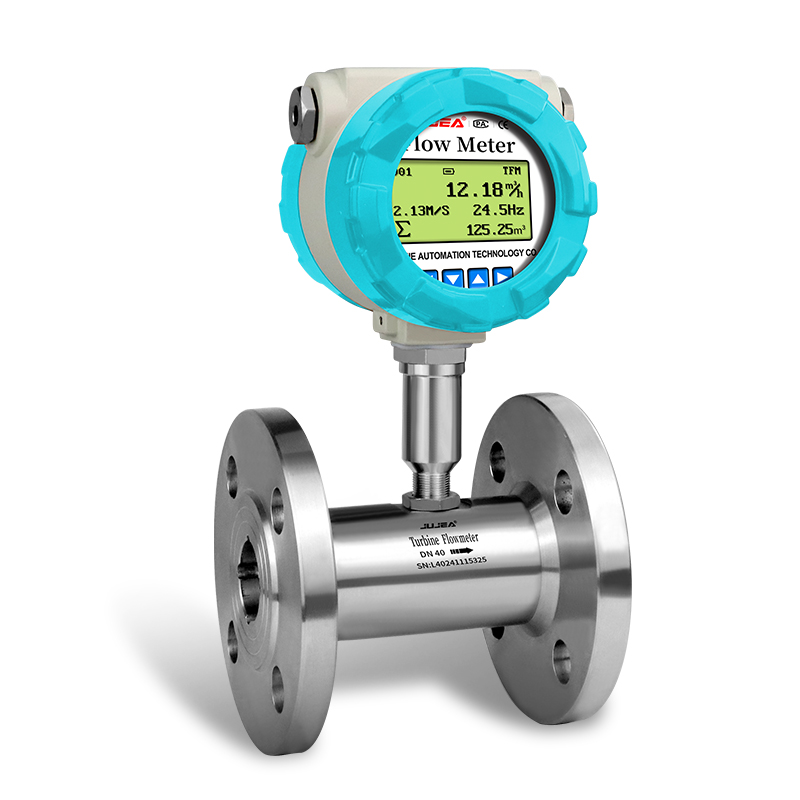
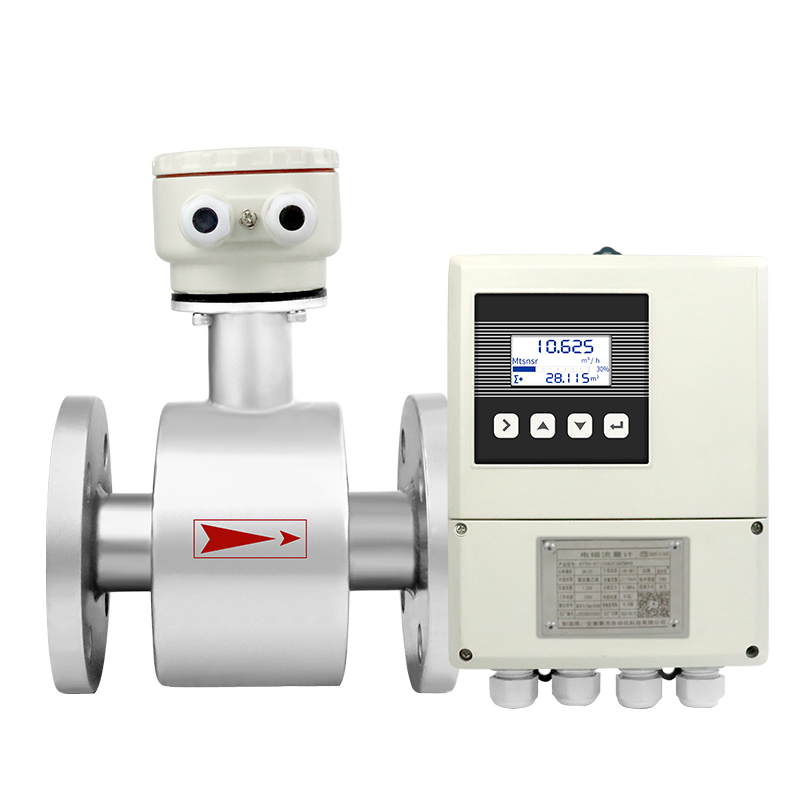
- Water injection station booster pump set: Deploy electromagnetic flowmeters, pressure transmitters and temperature transmitters. The electromagnetic flowmeter is used to accurately collect the water injection volume data at the pump set outlet and provide real-time feedback on the water delivery efficiency of the pump set. The pressure transmitter monitors the outlet pressure of the pump set to prevent the pump set from being overloaded or the pipeline from being damaged due to excessive pressure. The temperature transmitter synchronously collects the water injection temperature, providing basic data for the subsequent temperature and pressure compensation calculation of pressure and flow.
- Along the water injection pipeline: Deploy pressure transmitters and electromagnetic flowmeters at intervals to focus on monitoring pressure loss and flow attenuation during long-distance transportation. Through multi-point data comparison, abnormal conditions such as pipeline blockage and leakage can be quickly located, providing precise basis for pipeline maintenance.
- Wellhead of the water injection well: Install a flow control instrument, a pressure transmitter and a liquid level monitoring instrument. As the terminal control unit, the flow self-control instrument can preset the injection volume threshold according to the reservoir development requirements and automatically adjust the valve opening in combination with the real-time feedback data of the electromagnetic flowmeter. The pressure transmitter directly monitors the downhole water injection pressure to ensure that the pressure is within the reservoir's tolerance range and avoid problems such as layer crossing. Liquid level monitoring assists in determining the operational status of the wellhead buffer facilities.
1.2 Application Effect of Technology
Through the collaborative deployment and data linkage of the above-mentioned instruments, a closed-loop management of "monitoring - analysis - control" for the water injection system has been achieved. On the one hand, real-time data can visually reflect the parameter changes throughout the entire water injection process. Maintenance personnel can remotely grasp the equipment operation status through the central control system, significantly improving the efficiency of fault response. On the other hand, the dynamic adjustment function of the flow control instrument based on monitoring data ensures that the downhole water injection pressure and water volume are always in line with the reservoir development plan, effectively improving the water injection efficiency and the utilization degree of the reservoir, providing a solid guarantee for stable oil production and increased output.
2. Technological breakthroughs in the precision measurement of crude oil production
During the oil extraction process by oil pumping units, the water content of crude oil fluctuates greatly and dissolved gas is present, which leads to significant deviations in the density measurement of mixed crude oil and directly affects the accuracy of the determined crude oil production. Traditional measurement methods are unable to effectively handle the problems of dissolved gas and oil-water mixture, making it difficult to meet the demands of precise measurement. Innovative technological breakthroughs are urgently needed.
2.1 Core Technical solutions
In response to the above pain points, an intelligent analysis technology for dissolved gas in crude oil has been developed. The core lies in the real-time analysis and data processing of dissolved gas in crude oil metering pipelines through dedicated monitoring equipment, achieving precise determination of the density of gas-containing mixtures without separation or degassing. This technology does not require pretreatment of crude oil. Data collection and analysis are directly completed on the metering pipeline, which not only simplifies the metering process but also avoids metering errors caused by operations such as degassing and separation. Ultimately, the precise determination of crude oil production is achieved through density data conversion.
2.2 Key Measurement Difficulties and Countermeasures
During the application of this technology, challenges brought about by the characteristics and precision requirements of multiple media need to be overcome. The specific difficulties and corresponding solutions are as follows:
- Influence of high viscosity, high temperature and corrosive media: The measured medium is an oil-water mixture, and to prevent solidification, heat tracing and insulation are required, resulting in a high medium temperature. At the same time, crude oil has a high viscosity and contains corrosive components such as sulfides, which can easily cause wear, scaling or corrosion of instrument sensors. To this end, the sensor probes are made of special materials that are corrosion-resistant and wear-resistant, such as Hastelloy and other corrosion-resistant materials, and the structural design of the probes is optimized to reduce the adhesion and wear of the medium. For high-temperature environments, the instrument is subjected to high-temperature resistant packaging treatment to ensure stable operation under working conditions below 120℃.
- High precision and high stability requirements: Industry standards stipulate that the measurement accuracy should reach 0.5%FS and it is necessary to maintain stable operation for a long time. To achieve this goal, the technical solution adopts a "dual-sensor collaborative calibration" mode, which reduces the systematic error of a single sensor through cross-validation of data from the flow sensor and the density sensor. At the same time, it is equipped with a built-in temperature compensation algorithm to automatically correct the influence of temperature changes on density measurement. At the data processing level, adaptive filtering technology is introduced to filter out the instantaneous interference caused by medium fluctuations and ensure the stability of data output.
2.3 Technical Application Value
The application of this precise measurement technology has effectively addressed the measurement deviation issues of traditional methods, keeping the crude oil production verification error within 0.5%FS, and meeting the precise requirements for oilfield production assessment and production accounting. Meanwhile, the technology features a high degree of automation, enabling remote data transmission and automatic statistics. This reduces manual intervention and lowers operation and maintenance costs, providing crucial support for the digital and refined upgrade of oilfield production management.